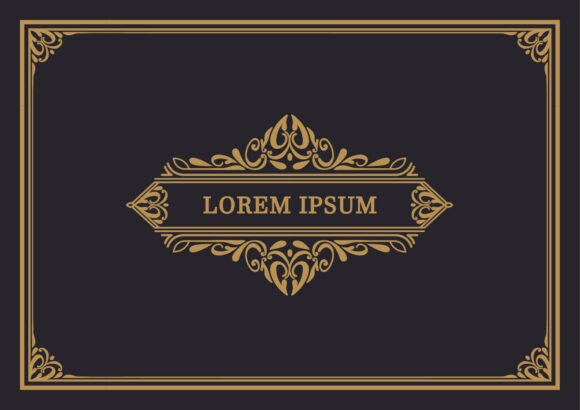
Timeless Elegance: Mastering Design with a Classic Retro Decorative Frame Collection
In an era where digital minimalism often dominates screen space, there is a resurging appetite for the ornate, the detailed, and the historically rich. Designers, crafters, and brand strategists are increasingly turning to Classic Retro Decorative Frame elements to inject soul and sophistication into their projects. These aren't just borders; they are narrative devices that instantly communicate heritage, luxury, and attention to detail. Whether you are drafting a wedding invitation that needs to feel heirloom-quality or designing a certificate that demands authority, the right ornamental flourish can transform a simple layout into a piece of art.
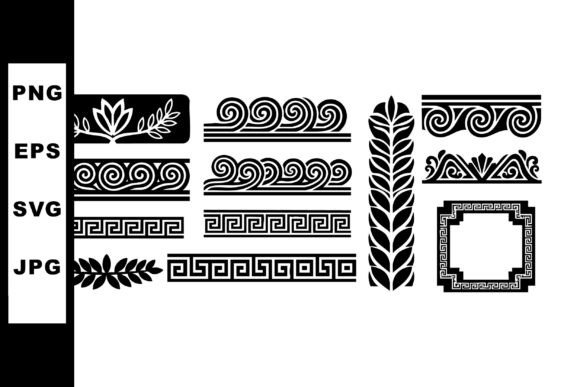
The allure of these designs lies in their ability to bridge the gap between centuries-old artistic traditions and modern digital workflows. By utilizing a curated collection of black-and-white decorative elements, creators can access the grandeur of the past without getting bogged down by complex illustration processes. This approach allows for a focus on composition and storytelling, letting the intricate scrollwork and floral motifs do the heavy lifting regarding aesthetic impact.
The Architectural Beauty of Ornamental Flourishes
At the heart of any great Classic Retro Decorative Frame set is the inspiration drawn from specific historical periods, namely Victorian, Baroque, and Rococo styles. Understanding these roots helps in selecting the right element for the right job. The Baroque influence brings drama and bold symmetry, perfect for statements that need to command attention. Rococo offers a lighter, more playful touch with its asymmetrical curves and delicate shell-like motifs, ideal for feminine or whimsical designs. Meanwhile, the Victorian era contributes dense, intricate detailing that speaks to tradition and formality.
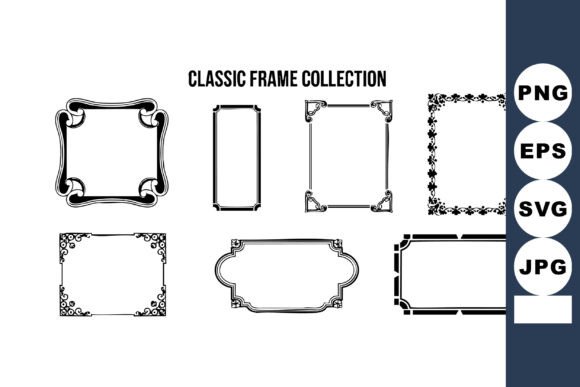
When you integrate these styles into a modern project, you aren't just adding a line around a photo; you are invoking a feeling. A square frame with heavy corner flourishes might ground a vintage branding logo, giving it a sense of established trust. Conversely, a circular frame with airy, vine-like extensions can soften a portrait, making it feel intimate and personal. The versatility of black-and-white vector graphics ensures that these elements remain neutral enough to adapt to any color palette while retaining their structural integrity.
Vector Precision for Modern Workflows
One of the most critical aspects of working with digital ornamental graphics is the file format. For professional results, raster images (like JPEGs or PNGs) simply do not suffice when scaling is required. This is why a high-quality bundle must include AI (Adobe Illustrator), EPS, and SVG files. These vector formats ensure that every curl of the scrollwork and every petal of the floral motif remains crisp, regardless of whether the final output is a business card or a large-format banner.
The inclusion of SVG files, in particular, has revolutionized how these classic elements fit into web design and digital marketing. Unlike older formats, SVGs are code-based, meaning they load quickly on websites and can be styled directly with CSS. This makes the Classic Retro Decorative Frame collection not just a tool for print designers but also for UI/UX designers looking to add a touch of elegance to landing pages or digital certificates without sacrificing performance.
Furthermore, the editability of AI and EPS files cannot be overstated. A designer might love the overall shape of a rectangular frame but need to adjust the thickness of the lines to match a specific font weight. With vector files, breaking apart the groups and modifying individual paths is seamless. This level of control empowers creators to customize the "off-the-shelf" look into something uniquely theirs, ensuring that the final product doesn't feel generic.
Practical Applications Across Industries
The utility of an Ornamental Frame Flourish Collection extends far beyond simple decoration. It serves as a foundational building block for various industries where presentation is paramount. Let's explore how these elements function in real-world scenarios.
- Wedding Invitations and Event Stationery: This is perhaps the most natural home for retro frames. Couples often seek a theme that feels timeless rather than trendy. Using a symmetrical flourish to frame the couple's names or to border the RSVP card creates an immediate sense of occasion. The black-and-white nature of the vectors allows printers to use specialty inks like gold foil, silver embossing, or even blind debossing, elevating the tactile experience of the invite.
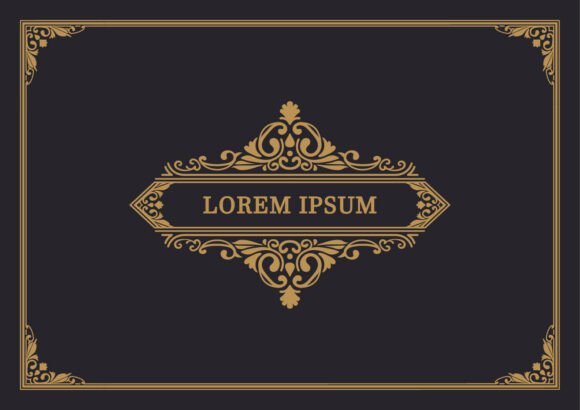
- Certificates and Awards: Authority is often visually coded through ornamentation. A certificate of achievement or a diploma looks significantly more official when enclosed in a robust, intricate border. The psychological effect of the Classic Retro Decorative Frame here is to suggest that the document inside is valuable and worthy of preservation.
- Vintage Branding and Monograms: For businesses in the artisanal food, craft beverage, or boutique fashion sectors, branding often relies on a "heritage" aesthetic. A circular frame containing a monogram can serve as the primary logo mark. When placed on packaging, it suggests a lineage of quality, even if the brand is new. The scrollwork acts as a visual shorthand for "crafted with care."
- Scrapbooking and Journaling: In the realm of personal memory keeping, these elements add structure to chaotic collections of photos and memorabilia. Digital scrapbookers can layer these frames over photos to create depth, while traditional paper crafters can print them on cardstock to create die-cut embellishments or stickers.
Design Considerations and Best Practices
While the beauty of these frames is undeniable, effective usage requires a keen eye for balance. A common mistake among beginners is overcrowding the design. Because a Classic Retro Decorative Frame is inherently detailed, it competes for attention. If you place highly detailed text or a busy photograph inside a heavily ornate border, the result can feel cluttered and hard to read.
To avoid this, adhere to the principle of contrast. If your frame is complex, keep the interior content clean and minimalist. Use ample whitespace (or negative space) to let the flourishes breathe. Think of the frame as a stage; if the stage decorations are elaborate, the actors (your text or main image) should be dressed simply so they don't get lost in the scenery.
Another consideration is scale. Just because you can resize a vector infinitely doesn't mean you always should. Extremely fine lines in a Rococo-style flourish might disappear when printed on a small sticker or viewed on a mobile screen. Always test your design at 100% size before finalizing. Sometimes, simplifying the element by removing the tiniest inner details can improve legibility without losing the overall character of the style.
Integrating Classic Styles into Contemporary Projects
The magic of modern design tools lies in the ability to remix old styles with new contexts. You aren't limited to using these frames in their traditional black ink. Imagine taking a Classic Retro Decorative Frame and applying a gradient mesh in Adobe Illustrator to give it a metallic sheen, or using it as a clipping mask for a textured watercolor background. The vector base provides the structure, but your creativity dictates the finish.
Moreover, these elements are excellent for creating cohesive design systems. By using the same corner flourish on a letterhead, a business card, and a website header, you create a visual thread that ties your brand identity together. This consistency builds recognition. When a client sees that specific swirl or leaf motif, they immediately associate it with your brand's level of quality and style.
For those involved in papercraft and sticker design, the precision of these vectors ensures clean cut lines. When sending files to a cutting machine, the smooth curves of an EPS file prevent the jagged edges that often plague lower-resolution imports. This results in a professional-grade physical product that feels substantial and well-made in the hand.
The Enduring Value of Ornamental Design
Trends in graphic design cycle rapidly, moving from flat design to neumorphism and back again. However, ornamental design possesses a staying power that few other styles can claim. A well-chosen Classic Retro Decorative Frame does not feel "dated" in a negative sense; rather, it feels "classic." It anchors a design in a tradition of craftsmanship that transcends fleeting digital fads.
Investing in a high-quality collection of these assets saves time and elevates output. Instead of spending hours drawing custom swirls that may lack historical accuracy or proportional balance, designers can leverage pre-crafted elements that have been refined for aesthetic perfection. This efficiency allows more time to be spent on the conceptual side of the project—thinking about the message, the audience, and the emotional response the design should evoke.
Ultimately, the goal of using these flourishes is to elevate the perceived value of the project. Whether it is a wedding invitation that becomes a keepsake, a certificate that is proudly displayed on a wall, or a brand logo that conveys instant prestige, the Classic Retro Decorative Frame is the silent ambassador of quality. By mastering the integration of these Victorian, Baroque, and Rococo inspirations, creators can produce work that resonates deeply, standing out in a crowded visual landscape with grace and authority.