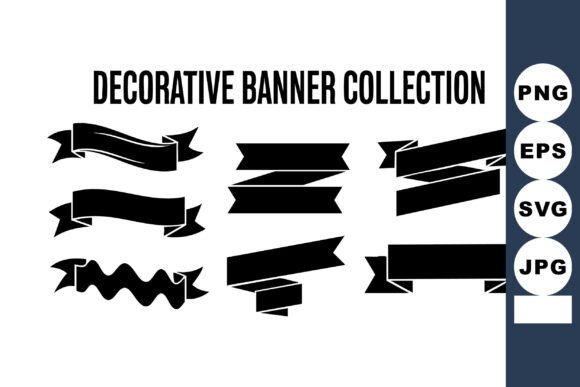
Elevating Visual Communication with a Versatile Decorative Banner Collection
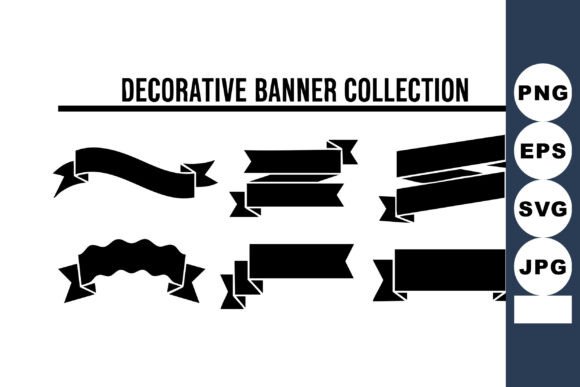
In the realm of graphic design and visual marketing, the ability to capture attention instantly is paramount. Whether designing a website header, crafting a social media campaign, or preparing print materials for a local event, the elements chosen to frame content play a critical role in user engagement. Among these elements, banners and ribbons serve as powerful tools for highlighting key information, celebrating achievements, or simply adding a touch of elegance to a layout. A Decorative Banner Collection with Various shapes and styles offers designers and creators a foundational asset library that bridges the gap between amateur experimentation and professional polish.
The modern digital landscape demands versatility. A single static image rarely suffices across all platforms. This is where a comprehensive collection of decorative banners and ribbons, presented in a clean vector illustration style, becomes indispensable. Such a resource provides not just images, but a flexible system of design components that can be adapted to fit countless narratives and brand identities.
The Strategic Value of Vector-Based Design Assets
When selecting design assets, the file format is often as important as the aesthetic quality. The inclusion of SVG (Scalable Vector Graphics) and EPS (Encapsulated PostScript) files in a downloadable ZIP package represents a significant advantage for professionals. Unlike raster images such as standard JPGs or PNGs, which are composed of a fixed grid of pixels, vector graphics are defined by mathematical paths. This distinction allows a banner to be scaled from the size of a business card to a massive billboard without any loss of resolution or clarity.
For web developers and UI designers, SVG files are particularly valuable. They render crisply on high-density displays, such as Retina screens, ensuring that the decorative folds and sharp edges of a ribbon look perfect on any device. Furthermore, SVG code can often be manipulated directly via CSS, allowing for dynamic color changes or hover effects without needing to edit the source file in complex software. This technical flexibility makes a Collection of decorative banners and ribbons a long-term investment rather than a one-time purchase.
However, the utility of such a collection extends beyond the tech-savvy. The inclusion of high-resolution JPG and PNG files ensures accessibility for users who may not have access to professional vector editing software like Adobe Illustrator or CorelDRAW. A small business owner creating a flyer in a basic word processor, or a teacher making a classroom certificate, can simply drag and drop these ready-to-use images into their documents. The "clean vector illustration style" mentioned in the asset description implies a lack of unnecessary clutter, making these banners easy to integrate into existing designs without clashing with other visual elements.
Diverse Applications Across Industries
The versatility of a varied banner collection means its applications are nearly limitless. Different industries leverage these assets to communicate specific messages effectively.
Retail and E-Commerce
In online retail, space is premium real estate. Banners are frequently used to announce sales, highlight new arrivals, or display trust badges like "Free Shipping" or "Best Seller." A ribbon with a distinct fold can draw the eye to a discount percentage, while a classic scroll-style banner might frame a seasonal greeting. The ability to customize colors within the vector files allows retailers to match these accents perfectly to their brand palette, maintaining consistency across the customer journey.
Education and Certification
Educational institutions and certification bodies rely heavily on formal aesthetics. Ribbons and banners are traditional symbols of achievement. When issuing digital certificates or awarding badges for course completion, a well-designed ribbon adds a sense of prestige and officiality. A collection featuring various shapes allows educators to differentiate between levels of achievement—for instance, using a gold-colored ribbon for first place and a simpler banner for participation.
Event Planning and Hospitality
From wedding invitations to corporate conference agendas, the hospitality sector uses decorative elements to set the tone. A vintage-style banner might suggest a rustic theme, while a sleek, geometric ribbon implies a modern, upscale event. The "various shapes and folds" available in a robust collection allow planners to curate a visual language that aligns with the event's atmosphere before a single word is read.
Navigating Shape, Fold, and Composition
The aesthetic impact of a banner is largely determined by its geometry. A Decorative Banner Collection with Various forms provides the necessary range to suit different compositional needs.
- Classic Ribbons: These often feature flowing tails and soft curves. They are ideal for adding a human, organic touch to a design. They work well when overlapping other elements, creating a sense of depth and layering.
- Geometric Banners: Characterized by sharp angles and straight lines, these are perfect for tech companies, financial reports, or modern branding. They convey stability and precision.
- Scrolls and Labels: Reminiscent of historical documents, these shapes add a narrative quality. They are excellent for storytelling headers or quoting testimonials.
- Corner Pieces: Often overlooked, corner ribbons are essential for framing photos or marking items as "New" or "Sold" without obscuring the main content.
Understanding the psychology of these shapes is crucial. Soft folds suggest approachability and celebration, while rigid structures imply authority and structure. By having access to a wide array of these forms, a designer can subtly influence how the audience perceives the message attached to the banner.
Workflow Efficiency and Customization
Time is a critical resource for creators. Starting a design project from scratch, drawing every curve and shadow of a ribbon, is inefficient. Utilizing a pre-made collection accelerates the workflow significantly. However, the true power lies in the customization capabilities offered by the vector formats.
Consider a scenario where a marketing team needs to launch a campaign across five different regional markets, each with a slightly different color scheme. With a raster image (JPG), changing the color of a banner would require complex masking and repainting, often resulting in a loss of quality. With the SVG or EPS files found in this type of collection, the process is instantaneous. A designer can select the path of the banner and apply a new fill color in seconds. This adaptability ensures that the core design asset remains consistent while allowing for infinite variations to suit specific contexts.
Moreover, the clean illustration style ensures that these elements do not date quickly. Trends in texture and shading come and go, but a clean, flat, or subtly shaded vector style tends to remain timeless. This longevity protects the brand identity from looking outdated within a year of deployment.
Technical Considerations for Implementation
While the benefits are clear, successful implementation requires attention to technical details. When integrating these banners into web projects, file size optimization is key. Although SVGs are generally lightweight, complex vector paths can sometimes bloat the code. Designers should inspect the SVG code to remove any unnecessary metadata or hidden layers before deployment to ensure fast page load times, which is a known ranking factor for search engines.
For print applications, the resolution settings of the accompanying PNG and JPG files must be verified. While the vector files can be scaled infinitely, the raster versions included in the ZIP are fixed at specific dimensions. Users must ensure they select the appropriate file size for their print resolution requirements (typically 300 DPI for high-quality print) to avoid pixelation.
Accessibility is another vital consideration. When using banners to convey important information (e.g., "50% Off"), the text within or overlaid on the banner must maintain sufficient contrast against the background color of the ribbon. The clean style of these illustrations usually facilitates good contrast, but it remains the responsibility of the designer to verify readability for all users, including those with visual impairments.
The Role of Asset Libraries in Creative Growth
Beyond immediate project needs, possessing a diverse library of assets fosters creative growth. When a creator has a toolkit of reliable, high-quality elements, they are more likely to experiment. They might try combining a geometric banner with a floral background, or layering multiple ribbons to create a complex badge. This experimentation leads to unique visual solutions that distinguish a brand from its competitors.
Furthermore, for educators and researchers studying visual communication, such collections serve as excellent case studies. They provide tangible examples of how shape, line, and composition interact to guide the viewer's eye. Analyzing the folds and shadows in a professionally drawn vector ribbon can teach students much about light sources and dimensional rendering.
In conclusion, a Collection of decorative banners and ribbons in different shapes and folds is more than just a folder of images; it is a strategic resource. It empowers a broad spectrum of users—from the hobbyist crafting a birthday invitation to the enterprise-level designer managing a global rebrand—to communicate with clarity and style. The combination of vector scalability, raster convenience, and stylistic variety ensures that these assets remain relevant and useful across the evolving landscape of digital and print media. By leveraging such a comprehensive toolkit, creators can focus less on drawing basic elements and more on the overarching narrative and impact of their designs.