Elevating Design with Decorative Book Elements: A Vintage Revival
In an era dominated by fleeting digital trends and minimalist interfaces, there is a profound and growing appreciation for design assets that evoke stability, wisdom, and timeless elegance. Decorative Book Elements with Closed and Open Books represent more than just clipart; they are visual anchors that communicate education, storytelling, and classic sophistication. Whether you are a marketer crafting a brand narrative, an educator developing course materials, or a blogger curating a literary review, the integration of vintage-style book illustrations can instantly elevate the perceived value of your content.
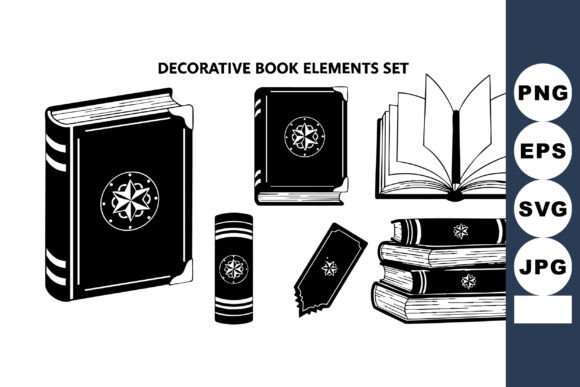
The specific collection featuring closed books, an open book, and a bookmark in a vintage style offers a versatile toolkit for modern creators. These elements are not merely decorative; they serve as semantic cues. A closed book suggests potential, mystery, or a completed journey, while an open book invites the viewer into a world of knowledge and discovery. The inclusion of a bookmark adds a layer of intimacy, suggesting a pause in reading or a cherished passage. When rendered in a classic, elegant design language, these vectors bridge the gap between traditional publishing aesthetics and contemporary digital workflows.
The Resurgence of Vintage Aesthetics in Digital Workflows
The current design landscape is witnessing a significant shift towards "digital warmth." As users become increasingly fatigued by sterile, flat designs and algorithmic uniformity, there is a marked preference for visuals that feel handcrafted and authentic. This is where Decorative Book Elements with Closed and Open Books find their relevance. The vintage style associated with these illustrations taps into a collective nostalgia for the tactile experience of physical libraries and printed pages.
This trend is not about rejecting technology but rather humanizing it. For entrepreneurs and business owners, incorporating these elements into branding materials signals a commitment to quality and depth. It suggests that the business values tradition and substance over quick fixes. In the context of educational mood setting, these graphics provide a psychological cue that encourages focus and learning. They transform a standard webpage or presentation slide into a space that feels curated and thoughtful.
Moreover, the evolution of vector technology has made these vintage styles more accessible than ever. Historically, achieving a true vintage look required complex texturing and manual illustration. Today, high-quality vector files allow designers to scale these intricate details from a tiny favicon to a massive billboard without losing resolution. The availability of formats like SVG and EPS ensures that the delicate lines and shading characteristic of classic engravings remain crisp across all devices, from high-resolution retina displays to mobile screens.
Practical Applications for Creators and Professionals
The utility of a comprehensive set containing closed books, open books, and bookmarks extends across various professional domains. Understanding how to deploy these assets effectively can enhance communication strategies and user engagement.
- Educational Institutions and E-Learning: For educators and online course creators, these elements are invaluable. An open book icon can signify the start of a new module, while a closed book might represent a final exam or a completed certification. The vintage style adds an air of academic authority, making the content feel more established and trustworthy.
- Publishing and Literature Blogs: Book reviewers and literary bloggers can use these graphics to break up text and create visual interest. A bookmark illustration serves as a perfect divider between chapters or reviews, guiding the reader's eye naturally through the content.
- Branding and Identity: Businesses in the legal, financial, or consulting sectors often seek to project an image of reliability and extensive knowledge. Incorporating a classic book element into a logo or letterhead can subtly reinforce these attributes without being overtly literal.
- Event Invitations and Stationery: For wedding planners or event coordinators, these vectors offer a sophisticated touch for invitations, particularly for literary-themed events, library fundraisers, or academic galas.
The practical implication here is versatility. Because the downloadable ZIP includes multiple file formats—SVG, EPS, JPG, and PNG—users are not restricted by their technical skill level or software preferences. A web developer can embed the SVG directly into code for optimal performance, while a social media manager can quickly drag and drop the PNG into a post. This flexibility ensures that the creative vision remains intact regardless of the medium.
Technical Advantages of Vector Formats in Modern Design
When selecting design assets, the file format is just as critical as the visual style. The inclusion of SVG (Scalable Vector Graphics) and EPS (Encapsulated PostScript) in this collection addresses a core need in modern responsive design. Unlike raster images, which can become pixelated when enlarged, vector files maintain their clarity at any size. This is essential for maintaining a professional appearance across diverse platforms.
For web designers, SVGs are particularly advantageous. They have small file sizes, which contributes to faster page load times—a crucial factor for SEO and user retention. Furthermore, SVGs can be styled with CSS, allowing developers to change the color of the book elements dynamically to match a website's theme or to add hover effects that enhance interactivity. Imagine a closed book icon that gently opens when a user hovers over it; this level of engagement is easily achievable with vector assets.
The presence of JPG and PNG files caters to those who need immediate usability without vector editing software. High-resolution PNGs with transparent backgrounds are ready for use in presentations, social media graphics, and print materials where quick deployment is necessary. This multi-format approach acknowledges the varied workflows of today's creators, from the tech-savvy coder to the busy marketing executive.
Adapting Classic Designs to Contemporary User Expectations
While the style is vintage, the application must be modern. Users today expect seamless integration and contextual relevance. Simply placing a generic book icon on a page is no longer sufficient; the element must serve a purpose within the user journey. The "educational mood" provided by these illustrations should align with the surrounding content to create a cohesive narrative.
Consider the changing habits of readers. With the rise of audiobooks and digital subscriptions, the physical act of reading has evolved. However, the symbolism of the book remains potent. Using these decorative elements can help ground digital experiences in the familiar comfort of physical reading. For instance, a podcast cover art featuring an open book and a bookmark can signal to listeners that the episode will be deep, informative, and story-driven.
Furthermore, the aesthetic of "classic and elegant design" resonates with a demographic that values curation. In a market flooded with mass-produced templates, customizing a vintage vector set allows brands to stand out. By adjusting colors, combining elements, or integrating them with modern typography, creators can produce unique visuals that feel both nostalgic and fresh. This balance is key to capturing the attention of adults aged 20–50, who often appreciate the charm of the past but demand the functionality of the present.
Strategic Recommendations for Implementation
To maximize the impact of Decorative Book Elements with Closed and Open Books, consider the following strategic approaches:
- Maintain Visual Consistency: If you choose a vintage style for your book elements, ensure that other graphical components on your page or document complement this aesthetic. Mixing overly modern, neon graphics with classic engravings can create visual dissonance unless done with intentional contrast.
- Leverage Semantic Meaning: Use the state of the book to convey status. Use closed books for archives, past projects, or upcoming releases. Use open books for active blogs, current courses, or live resources. This subtle visual language helps users navigate your content intuitively.
- Optimize for Accessibility: When using these images on the web, always include descriptive alt text. For example, describe the image as "Vintage illustration of an open book with a bookmark" rather than just "book." This ensures that screen readers can convey the context to visually impaired users, aligning with inclusive design principles.
- Experiment with Color: While the original vectors may be in black and white or sepia, do not hesitate to recolor them to match your brand palette. Vector files make this process simple, allowing you to retain the intricate details while ensuring brand alignment.
The convergence of timeless imagery and modern file technology creates a powerful resource for anyone looking to enhance their visual communication. Decorative Book Elements with Closed and Open Books are not just static images; they are tools for storytelling. By understanding their historical weight and adapting them to current digital standards, professionals can create content that is not only visually appealing but also emotionally resonant. As we move forward in a rapidly changing digital landscape, the elements that endure are often those that connect us to our shared human experiences—and few symbols connect us to knowledge and imagination quite like the book.