Choosing the Right Black White Decorative Bow Ribbon for Your Design Projects
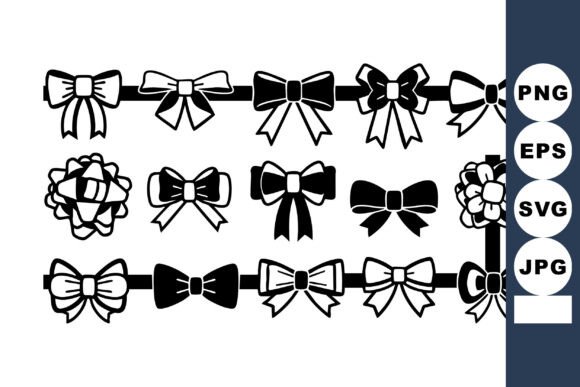
In the world of graphic design and digital crafting, few elements convey sophistication quite like a well-placed bow. The black white decorative bow ribbon has emerged as a staple asset for creators seeking versatility without sacrificing elegance. Unlike colorful alternatives that demand specific palette matching, monochromatic ribbons offer a neutral foundation that adapts seamlessly to weddings, corporate branding, holiday cards, and luxury packaging concepts. This specific category of vector illustrations typically features a curated collection of shapes and styles, often arranged in organized rows to facilitate quick selection during the creative process.
When evaluating resources for your next project, understanding the distinct characteristics of these monochromatic assets is crucial. A high-quality set usually includes a variety of forms—from tight, structured knots to loose, flowing tails—providing a comprehensive toolkit rather than a single isolated image. The "black and white" designation here is not merely a color choice; it represents a stylistic approach focused on contrast, shadow, and form. By removing color distractions, these designs allow the texture and drape of the ribbon to take center stage, making them ideal for projects where clarity and classic mood are paramount.
Evaluating Format Options: Vector vs. Raster
One of the most significant decision factors when acquiring a black white decorative bow ribbon set is the file format. Professional collections often provide a downloadable ZIP containing SVG, EPS, JPG, and PNG files. Understanding the tradeoffs between these formats is essential for determining which will best serve your specific workflow.
Vector Formats (SVG and EPS): For designers working in Adobe Illustrator, CorelDRAW, or web development environments, vector files are the superior choice. The primary advantage lies in scalability. Whether you are resizing a bow for a massive billboard or a tiny favicon, vector graphics maintain crisp, clean edges without pixelation. This is particularly important for print projects where high resolution is non-negotiable. Furthermore, vector files allow for easy color manipulation. Although the base asset is black and white, a vector bow can be instantly recolored to match a brand's specific hex code with a single click, offering flexibility that raster images cannot match.
Raster Formats (JPG and PNG): Conversely, JPG and PNG files cater to users who need immediate usability without specialized software. PNGs are particularly valuable due to their support for transparency. A black white decorative bow ribbon saved as a PNG can be dragged and dropped directly onto a website banner or social media post without the need to remove a background. However, the limitation here is resolution dependence. If a user attempts to enlarge a small PNG beyond its original dimensions, the image will become blocky and lose professional quality. These formats are best suited for final-output scenarios where the size is predetermined and fixed.
Stylistic Variations and Design Applications
Not all bows are created equal, and a robust collection will display a variety of shapes and styles to address different aesthetic needs. When reviewing a set arranged in multiple rows, you will likely encounter distinct categories of ribbon behavior.
- Structured Bows: These feature tight loops and short tails, mimicking the look of a gift box or formal attire. They convey order, precision, and tradition. These are excellent for corporate invitations or luxury product packaging where a neat appearance is required.
- Flowing Ribbons: Characterized by long, sweeping tails and looser knots, these designs suggest movement and grace. They are frequently used in wedding stationery, romantic greeting cards, and fashion-related graphics to add a soft, organic touch.
- Abstract or Stylized Knots: Some illustrations prioritize artistic interpretation over realism. These may feature exaggerated curves or simplified geometry, serving as modern design accents rather than literal representations of fabric.
The elegant and classic mood associated with black and white palettes makes these assets incredibly versatile. In a comparison with full-color illustrations, monochromatic bows avoid clashing with background imagery or text. For instance, placing a red bow on a green background creates a specific holiday association, whereas a black or white bow remains neutral, allowing the surrounding content to dictate the theme. This neutrality is a strategic advantage for designers who need assets that can be repurposed across multiple campaigns throughout the year.
Practical Use Cases and Integration
Integrating a black white decorative bow ribbon into your workflow can streamline several common design tasks. Consider the following scenarios where these assets prove most effective:
- Wedding and Event Stationery: Monochrome bows pair exceptionally well with calligraphy fonts and textured paper backgrounds. They add a touch of formality without overwhelming the delicate typography often found in invitations.
- E-Commerce Product Mockups: When showcasing digital products or physical goods online, a subtle bow overlay can simulate the experience of unboxing a gift. Using a PNG version allows for quick composition in tools like Canva or Photoshop.
- Web Design Accents: SVG bows can be implemented as CSS background elements or section dividers. Their lightweight file size ensures they do not slow down page load times, a critical factor for user experience and SEO.
- Scrapbooking and Digital Planners: For hobbyists creating digital planners, these ribbons serve as functional decorative elements to mark special dates or highlight important notes.
It is important to note that while these assets are highly adaptable, they are not a one-size-fits-all solution. If your project requires a highly textured, photorealistic fabric look with complex lighting and weave details, a flat vector illustration might appear too stylized. In such cases, high-resolution photography or 3D-rendered assets might be more appropriate. However, for the majority of layout-based design work, the clean lines of a vector bow provide a polished, professional finish that photographs often struggle to achieve due to lighting inconsistencies.
Making the Right Choice for Your Project
Selecting the appropriate resource ultimately depends on your technical requirements and artistic goals. If your priority is flexibility and scalability, prioritizing a package that emphasizes SVG and EPS files is the logical path. This approach future-proofs your design, allowing you to adapt the asset as your project evolves. On the other hand, if speed and ease of use are your primary constraints, and you are working within a fixed canvas size, the inclusion of high-quality PNGs offers a convenient shortcut.
Furthermore, consider the emotional tone of your project. The black white decorative bow ribbon inherently carries a sense of timelessness. It avoids the trends associated with specific color palettes that may date quickly. By choosing a classic monochrome style, you ensure that your design remains relevant and sophisticated regardless of shifting color trends. This is particularly valuable for branding elements that need to endure over time.
In conclusion, whether you are a seasoned graphic designer or a DIY enthusiast, incorporating a diverse set of monochromatic ribbons into your library is a practical investment. The combination of varied styles, from structured to flowing, paired with the technical benefits of multi-format delivery, provides a robust solution for a wide array of creative challenges. By carefully evaluating the balance between vector precision and raster convenience, you can select the assets that best elevate your visual storytelling, ensuring your final output is both elegant and effective.